
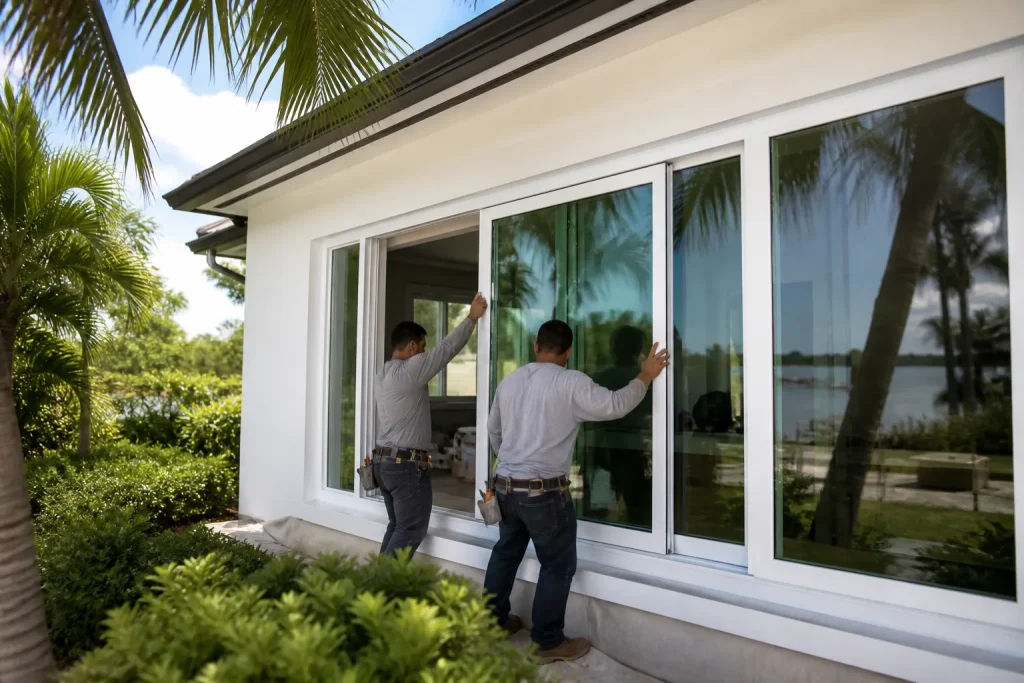
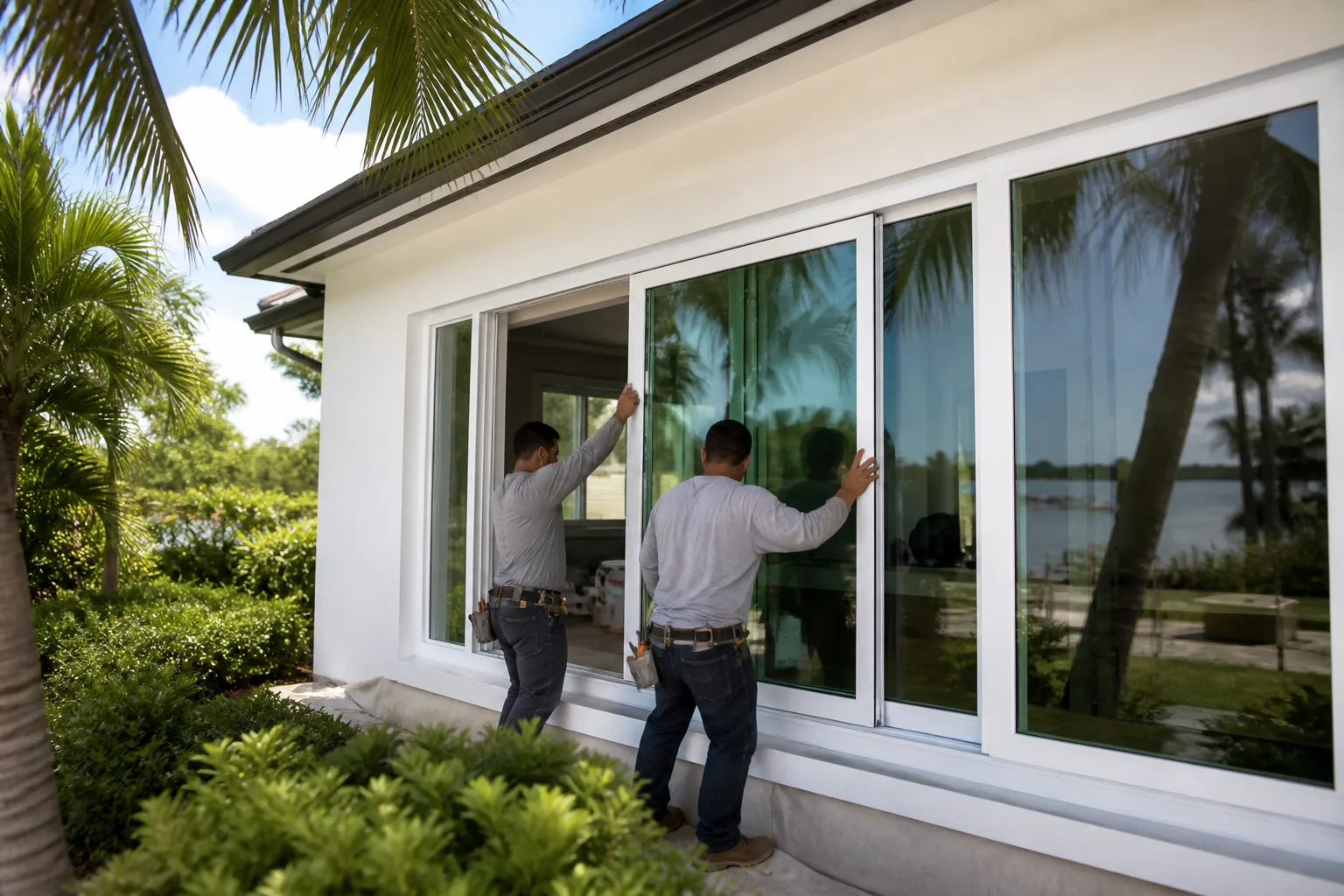
ECO Window Systems Window Installation in Palmetto Bay: A Homeowner’s Guide
ECO Window Systems makes a window that holds up to South Florida weather, but only if it’s set into your wall correctly. In Palmetto Bay, installation is where these windows either earn their 20-year lifespan or start sweating, sticking, and leaking by year five. Most ECO warranties that go unclaimed aren’t denied because the glass failed. They’re denied because the installer skipped flashing, blocked a weep hole, or never registered the unit. The product gets blamed for an installation problem. Here’s what a correct ECO installation looks like in Palmetto Bay, step by step, so you can hold any installer accountable. If you’d rather not manage the process yourself, call (386) 200-9224 and we’ll walk you through it.
Why Palmetto Bay’s Climate Demands a Different Installation Standard
Palmetto Bay sits in a high-humidity, wind-driven-rain environment that punishes shortcuts. The air stays wet most of the year, especially from June through October. Hurricanes that miss us still push horizontal rain against western-facing walls. A window that’s plumb and square in a dry climate can still fail here if the installer ignores vapor management and drainage.
For ECO units specifically, the installation sequencing matters more than the product. ECO frames are engineered with integrated weep systems. That means water that finds its way past the exterior seal is supposed to drain out through channels at the bottom of the frame. But if the installer slathers sealant over those weep holes during final caulking, water has nowhere to go except into the wall cavity. We’ve seen this on homes near the Palmetto Bay Village Center: a three-year-old ECO window with mold starting at the sill because someone sealed the drainage path shut.
Here’s what a Palmetto Bay-correct ECO installation should include:
- A sloped, code-approved sill pan at the rough opening before the window goes in
- Backer rod and sealant, not spray foam alone, at the interior perimeter
- Weep holes left completely clear after final sealing
- Flashing tape at the head and jambs that overlaps the nailing flange, shingle-style
- A small gap maintained at the sill so water can escape, never trapped against the frame
If you’re comparing bids, ask the installer to describe their sill pan procedure for an ECO unit. A blank stare is your answer.
What Dual-Layer Warranty Registration Actually Means for ECO Products
Every ECO window carries two warranty layers. Only one of them gets registered on most installs, and it’s the wrong one to rely on.
The manufacturer layer covers the glass and frame against defects: seal failure, warping, hardware breakage. ECO’s glass coverage typically runs 10 to 20 years depending on the line, but the clock starts only when the unit is registered with the manufacturer. Miss the registration window, usually 30 to 90 days after purchase, and the coverage shrinks or disappears.
The installer layer covers the workmanship: the shims, the flashing, the sealing, the squareness of the set. This is the layer most homeowners in Palmetto Bay never get in writing. An installer will say “we stand behind our work” and that’s the whole warranty. Then three years later the window binds in July and the phone number doesn’t ring anymore.
Our practice is to register both layers in writing before the truck leaves the driveway. The homeowner gets the manufacturer confirmation, the duration stated, and our 90-Day Done Right Promise on the labor. No fine print that covers neither. If a window is going to fail from an installation error, it almost always shows itself within those first 90 days: a fogged seal, a latch that doesn’t seat, a sash that sticks. We’d rather fix it then than argue about who’s responsible in year four.
Miami-Dade NOA Approval and Why Installation Must Follow It Exactly
ECO Window Systems sells hurricane-rated lines in South Florida. Those products carry Miami-Dade County Notice of Acceptance numbers. The NOA isn’t just a piece of paper. It’s the engineering document that says: this window, installed this specific way, will hold up to the wind pressures and impact requirements for our building code.
What most Palmetto Bay homeowners don’t know is that the NOA doesn’t just approve the product. It approves the product-plus-installation as a system. That means anchor type, anchor spacing, fastener size, and even how the window sits in the opening are all specified in the NOA. Change any of those details and the approval is void. Your hurricane protection is gone, even though the window came out of the right box.
For example, an ECO impact window might require a specific anchor pattern at 6-inch spacing along the frame. An installer who skips a few to save time hasn’t just done sloppy work. They’ve installed an unapproved assembly. If the worst happens during a named storm, the insurance claim gets complicated fast, and the manufacturer warranty won’t cover a product that was installed outside its NOA.
Before you sign anything, ask the installer to show you the ECO line’s NOA document for the exact window they’re quoting. It’s public record on the Miami-Dade County website. A competent installer will have it on hand. We carry NOA documents for every impact product we install, including ECO, because the Palmetto Bay building inspector will want to see them before signing off on the permit.
Related: Window Installation in Palmetto Bay covers the full scope of what a code-compliant install requires in our area.
What a Correct ECO Installation Looks Like at Each Stage
If you’re home during the install, and you should be, you can catch problems before they’re buried behind trim and stucco. Here’s the frame-by-frame walkthrough, Palmetto Bay edition.
Rough Opening Check
Before the first window comes off the truck, the opening should be measured in three places: top, middle, bottom. The rough opening needs to be square within a quarter inch. Palmetto Bay homes built in the 1980s and 1990s, especially in the single-story neighborhoods west of Old Cutler Road, have settled enough that openings are out of square by half an inch or more. A competent installer accounts for this with shims. An incompetent one forces the window in and the frame twists.
Look at the sill when the old window comes out. If there’s dry rot or termite damage, the installer should point it out and talk through repair before proceeding. If they set a new ECO window over compromised wood and cover it up, you’ll be replacing that window in five years.
Shimming and Setting
The window should be shimmed at the corners and along the jambs, never just wedged and nailed. Shims transfer the weight correctly and keep the frame true. The test is simple: after the window is set, the sash should open and close with even resistance throughout its travel. No catching, no binding, no spots where it suddenly gets tight. A Palmetto Bay window that binds in July is usually an installation problem, not a product defect.
Final Sealing
Walk around after the crew says they’re done. Run your eyes along the bottom of the exterior frame and count the weep holes. They should be visible and clear. Push gently on the window from inside; it shouldn’t flex. And ask to see the flashing tape at the head flashing before any trim goes back on. Once trim covers it, you’ll never see it again, which is exactly why some crews skip it.
If all of that sounds like too much to police, it’s part of why we do what we do. A uniformed, background-checked technician measures every opening twice and documents every stage before we call the job done. If the pane is not true, the job is not done.
How to Verify an ECO Installation Before the Crew Leaves
You don’t need special tools to catch most installation errors. You need five minutes and the willingness to look.
- Operate every sash. Open, close, lock, unlock. Do it three times per window. Binding on the first cycle is a shimming problem. Binding that develops later is a settling problem. Either way, it’s not normal.
- Check the weep holes from outside. Kneel down and count them. Every ECO unit has them. If you can’t see them, ask why.
- Run a hand along the interior caulk line. It should be one continuous bead, no gaps, no smears, no spots where sealant squirted into the track.
- Look for daylight around the closed sash. Close the window and stare at the seal. Any sliver of light means air is moving through. In Palmetto Bay’s humidity, that’s condensation waiting to happen.
- Ask for the registration paperwork. Both warranty layers, in writing, before the truck leaves. If they say they’ll email it later, they won’t.
We pulled a fogged ECO window out of a home just off Southwest 82nd Avenue last spring. It was four years old. The glass seal had failed and moisture was trapped between the panes. The homeowner had the paperwork from the original installer, a company that isn’t around anymore. The manufacturer layer had never been registered. The installer layer was a handshake. The homeowner paid for a new unit out of pocket. That’s the expensive version of this story, and it happens in Palmetto Bay more than anyone wants to admit.
What This Costs and What You’re Actually Paying For
ECO impact window installation in Palmetto Bay typically runs $800 to $1,400 per opening depending on size, line, and whether you’re pulling a permit. Non-impact ECO units run less, but most Palmetto Bay homeowners need impact or high-pressure-rated products for code compliance. The installation is maybe 30 to 40 percent of that total, and it’s the cheapest insurance you’ll ever buy against a 20-year product failing in year three.
Pricing for a standard 3-by-5-foot opening in Palmetto Bay generally falls like this:
| Line Item | Typical Range |
|---|---|
| ECO non-impact vinyl window, installed | $550 - $850 per window |
| ECO impact vinyl window, installed | $800 - $1,100 per window |
| ECO impact aluminum-framed, installed | $950 - $1,400 per window |
| Permit and inspection | $150 - $400 depending on scope |
| Sill pan repair or rough opening correction | $75 - $250 if damage is found |
If you’re getting quotes far below these numbers in Palmetto Bay, ask what’s being left out. Usually it’s the permit. Sometimes it’s the flashing. Occasionally it’s both, and the homeowner doesn’t learn that until the inspector won’t sign off or the first heavy rain finds the gap.
We quote manufacturer lines side by side on paper, including ECO, Andersen, Pella, and Marvin, so you can see exactly what each option costs and what you’re giving up at each price point. A square deal means you see the numbers before you commit, and the number on the quote is the number on the bill.
The Bottom Line
ECO Window Systems makes a good product. The Palmetto Bay homeowners who get 20 years out of it are the ones who paid as much attention to the installation as the price tag. The paperwork matters: both warranty layers in writing, durations stated. The NOA matters: the installation is part of the hurricane approval. And the details matter: weep holes clear, sashes operating smooth, flashing done right.
If you’re in Palmetto Bay and need help choosing or installing ECO windows, we offer free estimates and we’ll be there when we say. We’ve been serving communities like this one for over 42 years through our TruePane Windows & Doors home heritage, and we plan to be here in thirty years more. Call (386) 200-9224 and ask for Dale. A live person answers, day or night.
Frequently Asked Questions
ECO impact window installation in Palmetto Bay typically runs $800 to $1,400 per opening including materials and labor, depending on frame material, size, and permit requirements. Non-impact ECO vinyl units start around $550 per window. The biggest cost variables are the rough opening condition and whether the installer is pulling permits. Call (386) 200-9224 for an exact quote, free and in writing.
It shouldn’t. With us, the quote is the price, no change orders unless you request a change. If an installer finds rotted wood or termite damage at the rough opening, that’s a legitimate add-on, but it should be discussed with you before any work continues, with its own written line item. If the price changed without a change order, that’s not a square deal. Call (386) 200-9224 if you’d like to see how we structure quotes so there are no surprises.
Yes. Palmetto Bay requires permits for window replacement, especially impact windows, which must be inspected for Miami-Dade code compliance. An installer who suggests skipping the permit is exposing you to insurance and resale problems. We pull permits on every job and schedule the inspection when the work is done. If you’re comparing bids, verify that the permit fee is in the quote. See also: Window Replacement in Palmetto Bay.
Most window-by-window replacements run one to two hours per opening once the old unit is out and the opening is prepped. A full-house project in Palmetto Bay, meaning 10 to 15 windows, typically takes two to three working days. A crew that says they’ll do the whole house in one afternoon is skipping steps. You want the crew that takes the time to do the rough opening right. For more on scope and timing, visit Door Installation in Palmetto Bay to see how we approach similar work.
Written by Dale Kessler, Owner at TruePane Windows & Doors, serving Palmetto Bay since 2008.
Need Windows & Doors Help?
Call TruePane Windows & Doors - licensed & insured, here with fast after-hours help in Palmetto Bay.
(386) 200-9224